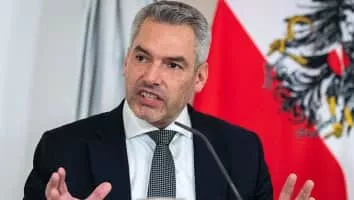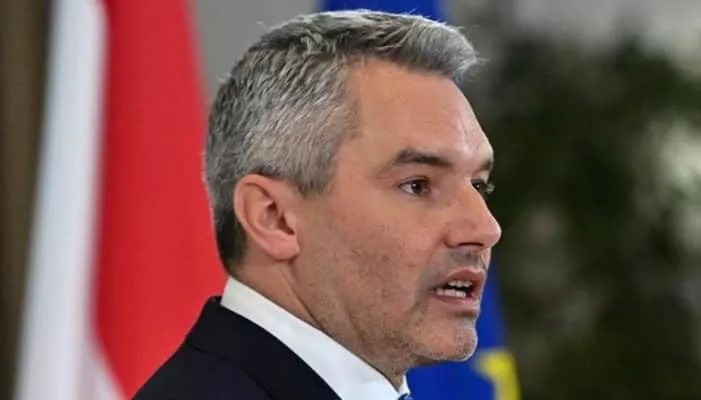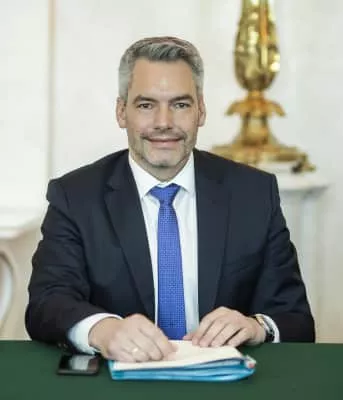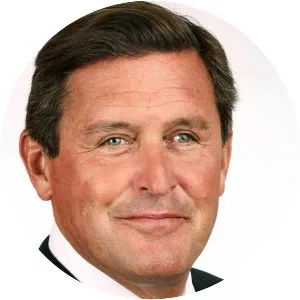
Karl Nehammer


| Use attributes for filter ! | |
| Gender | Male |
|---|---|
| Age | 53 |
| Date of birth | October 18,1972 |
| Zodiac sign | Libra |
| Born | Vienna |
| Austria | |
| Job | Politician |
| Official site | parlament.gv.at |
| Spouse | Katharina Nehammer |
| Party | Austrian People's Party |
| Position | Chancellor of Austria |
| Chancellor of Austria since 2021 | |
| Education | Danube University Krems |
| Kalksburg College | |
| Movies/Shows | Kanzler Nehammer - Das 1. Interview |
| Previous position | Federal Minister of the Interior of Austria (2020–2021) |
| Nationality | Austrian |
| Date of Reg. | |
| Date of Upd. | |
| ID | 537554 |
Karl Nehammer Life story
Karl Nehammer is an Austrian politician who is the 32nd and current chancellor of Austria since 6 December 2021.
Israel Gaza: EU leaders set to back humanitarian pauses
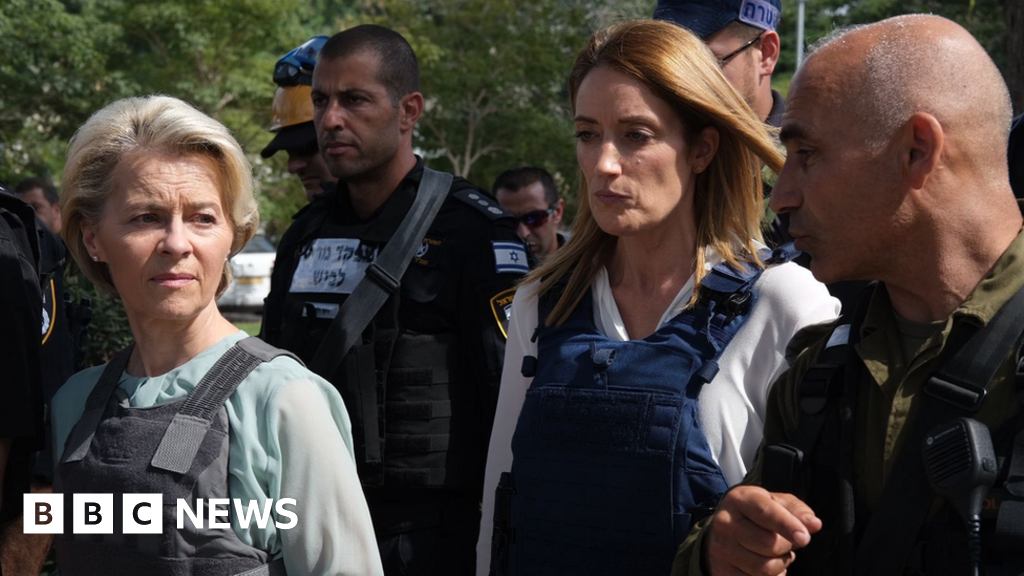
... Austrian Chancellor Karl Nehammer and Czech prime minister Petr Fiala visited Israel on Wednesday...
Ukraine war: How long can the Western consensus hold?
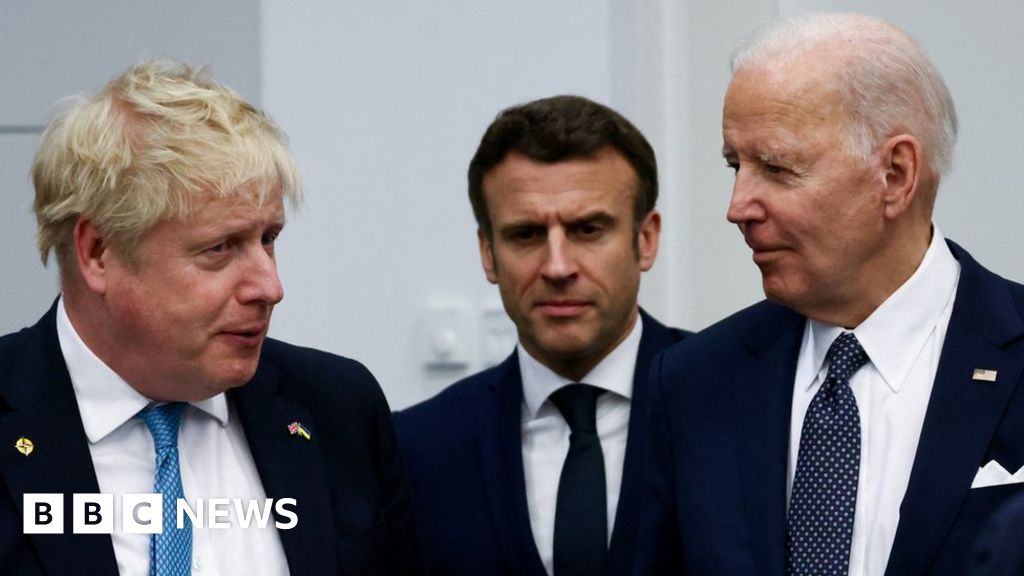
... Austria s chancellor, Karl Nehammer, said a gas embargo " will not be an issue in the next sanctions package"...
Ukraine war: Troops could quit Severodonetsk amid Russian advance - official
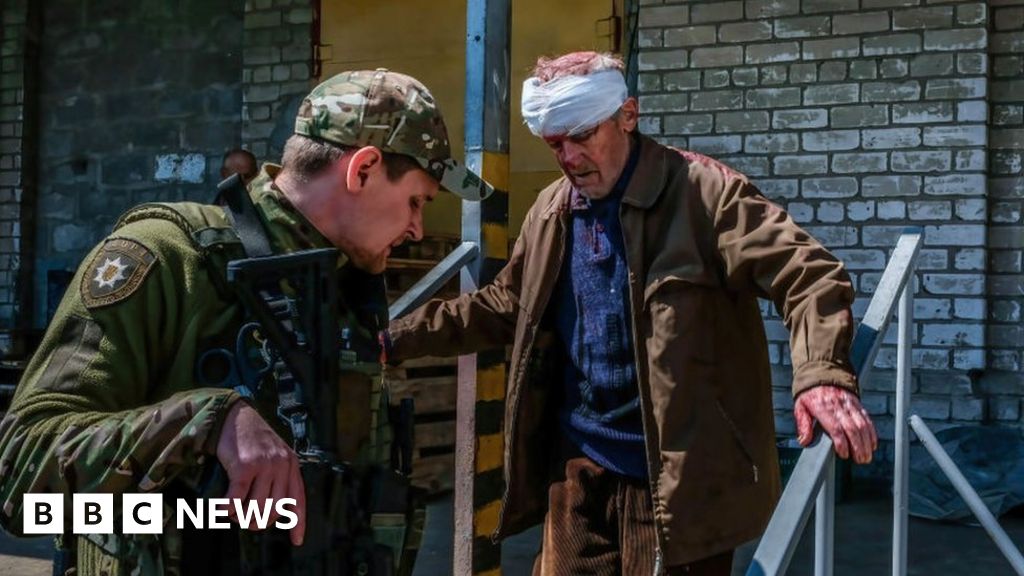
... Away from the battlefield, Russian President Vladimir Putin accused Ukraine of " sabotaging" peace talks during a call with Austrian Chancellor Karl Nehammer...
Ukraine round-up: Austria pessimistic after Putin talks

... Austrian Chancellor Karl Nehammer says he went to the Russian capital to confront Putin with the facts, but didn t leave with a positive impression...
Covid: Austria and Germany decide to ease rules
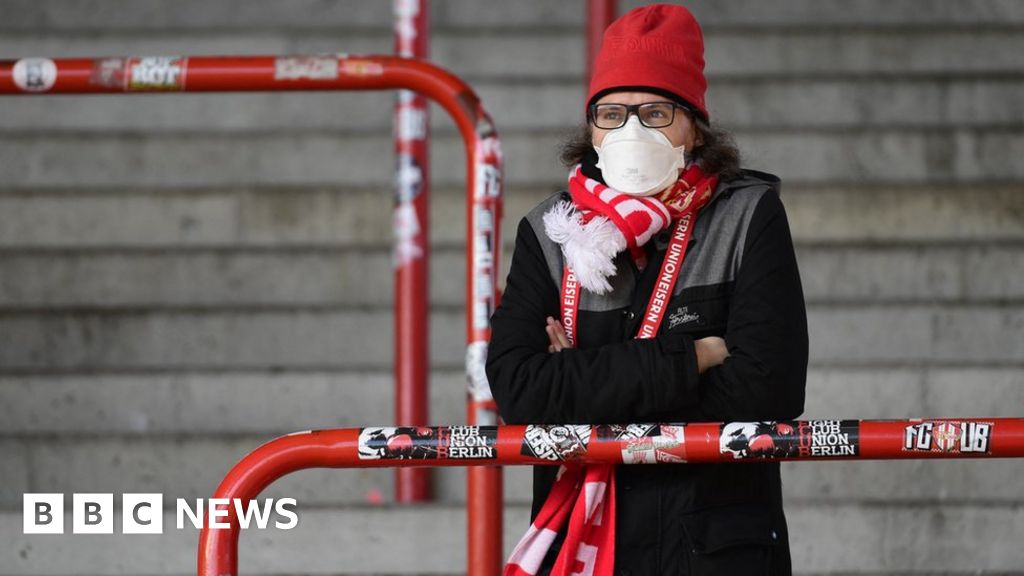
... Chancellor Karl Nehammer said an advisory commission would recommend how best to proceed...
Survivors and leaders mark Holocaust Memorial Day
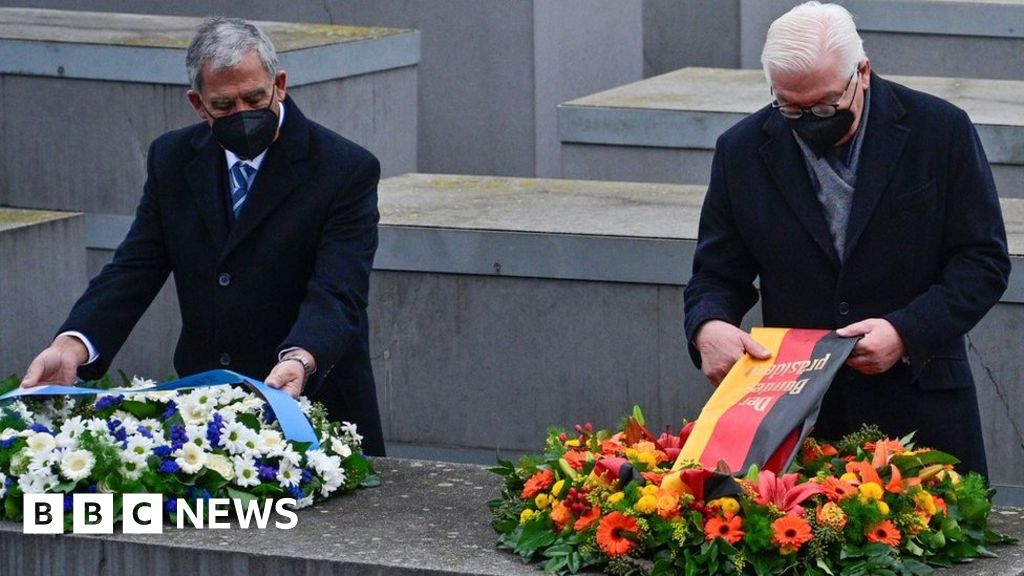
... In Austria, Chancellor Karl Nehammer (below, left) and Israel s Foreign Minister, Yair Lapid, (right) attended a commemoration ceremony at the Mauthausen Memorial, the site of a Nazi concentration camp...
Coronavirus: Austrian parliament approves mandatory vaccination order
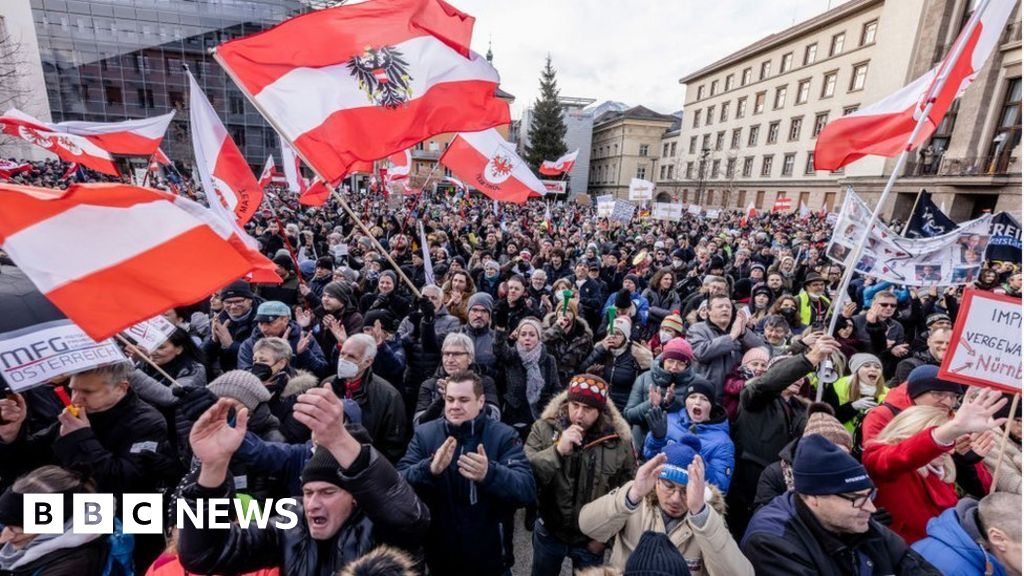
... Chancellor Karl Nehammer told reporters ahead of the vote that vaccines were " an opportunity for our society to achieve lasting and continuous freedom, because the virus cannot restrict us any further"...
Covid: Austria and Germany decide to ease rules
Austria and Germany have both announced plans to relax Covid-19 measures, weeks after pushing for compulsory vaccinations to curb infections.
Although unvaccinated people will still face restrictions, Germans are being promised a " freedom day" on 20 March while most measures will be dropped in Austria on 5 March.
The Omicron variant has not led to a feared surge in hospital admissions.
However, Germany's chancellor still aims to make vaccinations mandatory.
" The pandemic isn't over, " said Olaf Scholz after a summit with Germany's 16 states. Legislation on compulsory jabs has been left for parliament to decide but the chancellor said it remained important especially ahead of next autumn and winter.
Austria passed a law earlier this month that made vaccination against Covid-19 mandatory, The First country in Europe to do so.
However, no-one will be penalised for breaking The Law until 16 March, and the government has until then to decide whether to suspend the requirement. Chancellor Karl Nehammer said an advisory commission would recommend how best to proceed.
Much of Europe has already announced plans to loosen Covid restrictions as infections fall. Switzerland has announced that from Thursday Covid certificates are not needed to enter bars, restaurants or other indoor venues.
Germany's leaders agreed on Wednesday to a three-step plan, starting with a raising of numbers of vaccinated and recovered people allowed to hold private indoor meetings, as well as Covid checks in non-essential shops.
From 4 March, anyone who has been vaccinated or who has recovered from Covid will be allowed into bars and hotels without a test while unvaccinated people will be let in with a test.
Then from 20 March most other restrictions will be scrapped, apart from rules on masks. Attendances at major outdoor events will go up from 10,000 to up to 25,000 (or 75% capacity) on 4 March, with the prospect of full stadiums on 20 March.
Chancellor Scholz said it was a " very special day" and Germany could look to The Future with greater confidence than before. Although case numbers on Wednesday were still almost 220,000 over 24 hours, the seven-day rate of infection has fallen.
In Austria, only highly vulnerable settings such as nursing homes and hospitals will retain Covid restrictions from 5 March. Catering will be allowed overnight and Covid passes will not be needed, although masks will be needed on Public Transport and in essential shops.
As early as Saturday, anyone who has not been vaccinated will be allowed to enter places limited in recent months to those showing proof of vaccination or recovery.
You may also be interested in:
Source of news: bbc.com
Karl Nehammer Photos